Yes Breizh think tanks

The role of think tanks

The think tanks analyse the realities of Brittany as they are: housing, health, languages, purchasing power, safety, the environment, institutions and the economy.

They shed light on the facts that some public officials play down, that some media ignore, or that some parties reduce to slogans.

They structure this work in a demanding approach: clear methodology, factual analyses, consensual decisions and measurable action plans.

Reflection committees

Why join a committee?

Joining a committee means making a direct contribution to understanding Brittany and its future.

Your skills, experience or interest become useful for analysis, discussion and solutions.

You'll be helping to build a credible, well-argued and realistic Breton project.

How do our committees work?

Each committee follows a precise method: collect referenced facts, analyse, discuss, decide and then draw up an action plan.

Each plan includes: sourced findings, proposed measures, timetable, those responsible (maximum two) and result indicators.

The actions are implemented, evaluated each year and adjusted to ensure continuous progress.

Reflection committees

Themes for reflection

The files are organised into three groups:

Breton fundamentals Brittany: Languages of Brittany, reunification of Brittany, teaching the History of Brittany, a special status, a Brittany connected to other Celtic countries.

Everyday emergencies housing, health, safety, purchasing power and the environment.

Cross-functional issues Energy, economic development, digital technology, sea & coast, agriculture.

Each theme has its own dedicated committee, open to contributions.

Breton fundamentals

The committee analyses the status of the Breton, Welsh and French languages, their use, the problems they face and existing public policies.

He compares European models, in particular Scotland, where Gaelic and Scots are officially recognised.

Objective: to define a modern and realistic Breton language policy (education, culture, media, public visibility).

The committee is studying the institutional, historical, cultural and economic issues surrounding the return of the Loire-Atlantique region to Brittany.

It analyses the constitutional and political obstacles, comparable European models and realistic implementation scenarios.

Objective: to propose a solid action plan for a coherent, efficient and reunified Brittany.

The committee examines the absence of the History of Brittany in school curricula, its effects on collective consciousness and cultural transmission.

It analyses the possible levers: education, culture, media productions, local initiatives.

The aim is to reintegrate the history of Brittany into education, culture and public life.

The committee is studying the current margins of French law and European models to strengthen Breton skills.

It examines devolution, regional powers, constitutional blockages and possible institutional options.

Objective: to propose a credible institutional architecture for a more autonomous and responsible Brittany.

The committee is analysing existing cooperation with Ireland, Scotland, Wales, Cornwall and the Isle of Man.

It explores the cultural, economic and institutional levers for strengthening these links.

The aim is to anchor Brittany in the contemporary dynamic of the Celtic nations.

Everyday emergencies

The committee is examining access to housing, the impact of second homes, tourist rentals, areas under pressure and existing models (resident status, quotas, local taxation).

It examines the legal options: municipal, departmental and regional levers.

Objective: to propose legal and operational solutions to enable residents to live and work in Brittany.

The committee analyses medical deserts, the closure of hospital services, overcrowding in emergency departments and the exhaustion of care staff.

It identifies local, regional and professional levers for improving access to care.

The aim is to propose concrete actions to rebuild a local, sustainable healthcare offer.

The committee studies the actual data: areas concerned, types of offence, resources of the police force, operation of the local justice system.

It assesses unmet needs in terms of local presence, mediation, public infrastructure and social prevention.

The aim is to define a preventive, fair and locally-based approach to safety in Brittany.

The committee analyses local wages, the cost of living, transport, energy, food and short distribution channels.

It examines territorial inequalities and the levers for action: social pricing, mobility, SSE, local agriculture.

The aim is to propose measures for Brittany to improve everyday life.

The committee is examining the issues of water, biodiversity, agriculture, pollution, climate and soft mobility.

It proposes pragmatic, local solutions that are compatible with economic realities.

The aim is to preserve, restore and improve the Breton environment in a local context.

Cross-functional issues

The committee analyses local production, the energy transition, external dependency and energy sovereignty options.

Objective: to identify realistic choices for a sustainable energy strategy in Brittany.

The committee studies the business fabric, employment, possible relocations and structural obstacles.

The aim is to put forward concrete proposals for a more robust and self-sufficient Breton economy.

The committee is examining Internet access, cybersecurity, digital sovereignty and data infrastructures.

The aim is to strengthen Brittany's digital resilience.

The committee analyses fishing, shellfish farming, rising sea levels, coastal preservation and maritime activities.

Objective: to propose a sustainable strategy for Brittany's sea and coastline.

Agriculture in Brittany is an economic mainstay, a cultural heritage and a major ecological challenge.

The committee is analysing production models, farm transfers, farm incomes, food sovereignty, water management and land tensions.

The aim is to put forward realistic proposals for sustainable, profitable, diversified and resilient agriculture in Brittany.

Frequently asked questions

Do you need to be an expert?

No. Seriousness comes from facts and method. Every contribution counts.

How long does it take?

Each committee proceeds at its own pace. You participate according to your availability.

How do you get started?

By joining a committee. You will receive the resources, the methodology and the first files.

What tools are provided?

Working documents, analysis guides, action plan templates, comparative resources, online meetings, methodological support.

Join a committee and drive the Yes Breizh project forward


    Committee (one or more)

    Type of involvement desired


    captcha

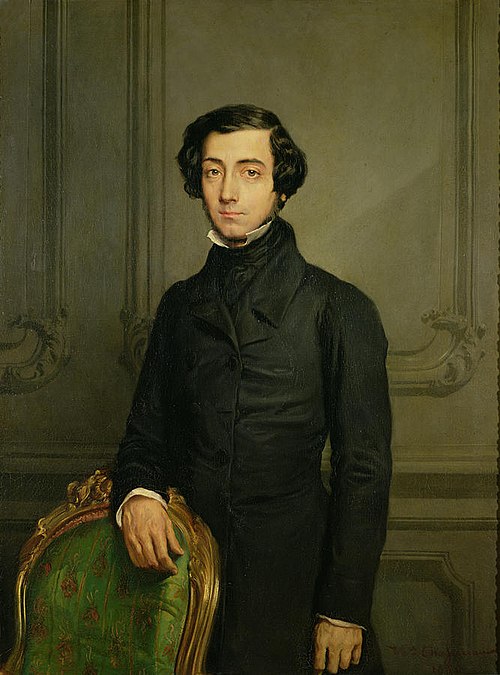
    "The strength of free peoples lies in the very heart of civil society"."
    Reflection committees
    Alexis de Tocqueville
    Democracy in America (1835)