



The Breton climate is no longer what it once was
Climate change adaptation in Brittany has become a major issue.
In recent years, extreme weather events have become more frequent.
Heatwaves are becoming more frequent. Summer droughts are now affecting regions previously considered safe. At the same time, winter storms are intensifying and coastal erosion is progressing along many sections of the Breton coast.
For a long time, we built our homes, infrastructure, and networks assuming that tomorrow's climate would resemble yesterday's. This assumption is no longer valid. It is now apparent to everyone that conditions are changing more rapidly than expected.
Faced with this reality, the debate is no longer solely about the environment. It also concerns our collective ability to anticipate future changes. In other words, who is preparing Brittany for 2040, 2050 or 2060 today?
The question is worth asking. Indeed, the consequences of climate change are always felt locally. However, a large proportion of decisions are still made far from Brittany.
Brittany faces different challenges from the rest of mainland France
Climate change is a global phenomenon. However, its consequences vary significantly from one region to another.
In the Alps, melting glaciers are a major issue. In the Mediterranean south, concerns primarily relate to fires and water scarcity. Overseas, cyclones pose a constant threat.
Brittany, meanwhile, faces other challenges. It must protect over 2,700 kilometres of coastline. It must secure its water resources. It must adapt its agriculture, housing, and infrastructure to new conditions.
However, rules, standards and priorities are still largely determined at the national level. This organisation may seem logical when it comes to broad principles. On the other hand, it quickly shows its limitations when it comes to responding to very different local realities.
A simple question then arises: why should the answers be the same when the problems are not?
Water and the coast: two Breton emergencies
Brittany has a reputation as a wet region. Yet, almost every summer, some communes have to face up to tensions in the supply of drinking water.
This situation might seem paradoxical. In reality, it highlights the limits of a system that sometimes struggles to anticipate future developments. The challenge is not just about receiving rain. It’s also about storing water when it’s plentiful, securing water sources, modernising networks, and limiting losses.
However, these decisions require a long-term vision. They also presume a thorough knowledge of local realities.
Meanwhile, the Breton coastline is one of our country's most precious assets. However, it is also one of the most exposed to the consequences of climate change.
Erosion is already affecting many stretches of coastline. Furthermore, some municipalities must consider how their urban planning will adapt to the risks of marine submersion. In several areas, local elected officials are noting that procedures remain lengthy, whilst natural phenomena are accelerating.
Residents of the Breton coast are perfectly aware of these stakes. Therefore, wouldn't it be logical for them to have more resources to address them?
Urban planning, housing and prevention: preparing Brittany for 2050
Adapting Brittany for tomorrow's climate doesn't just mean reacting to crises.
Our towns, cities and homes must also be gradually transformed.
Today, many local authorities are looking to increase the amount of greenery in public spaces. They want to create shaded areas, encourage water infiltration, and limit the effects of heatwaves. However, the administrative processes often remain complex.
At the same time, a significant portion of Brittany's housing stock was designed for a different climate. Homes now need to meet new requirements. Winter insulation remains essential. However, summer comfort is also becoming a priority.
Therefore, energy renovation programmes will need to take this change into account. Solutions suited to Paris or Marseille do not always correspond to Breton realities.
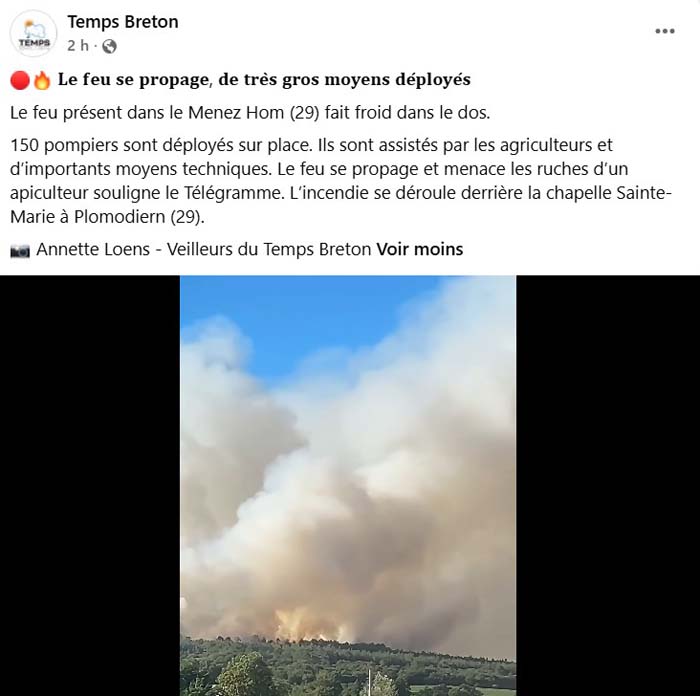
The issue of fires also illustrates this need for anticipation. For a long time, Brittany considered itself relatively protected. However, the fires in the Monts d'Arrée have shown that this certainty belongs to the past.
Since then, everyone has a better understanding that risks are evolving. Prevention measures will therefore have to evolve too. Here again, the most effective answers will often be those that originate from the ground up.
Agriculture, energy and transport: everyday major choices
Brittany's agriculture is among the first affected by climate change. Increasingly frequent periods of drought are already changing certain practices. Water needs are evolving. Some productions must adapt.
In this context, agricultural decisions cannot be considered solely at a national or European level. The realities of a farm in Brittany often differ from those observed in other French regions.
Energy is another telling example.
Brittany has considerable potential in the fields of offshore wind, tidal stream, biomass, and other marine renewable energies.
Yet, the broad energy guidelines remain primarily defined elsewhere. This situation raises a simple question: who should set the priorities when it comes to valuing Brittany's natural resources?
Transport also deserves specific consideration.
Brittany occupies a particular geographical position at the western edge of Europe. Its needs concern rail transport as much as ports, maritime links, or rural travel.
However, the choices made in Paris do not always correspond to the expectations expressed locally. This does not mean that all decisions are bad. On the other hand, it shows that Breton priorities are not being taken into account by the central government; and above all, in the true interest of the Breton people.

The same question keeps coming up
When we examine water, coastlines, housing, agriculture, energy, or transport, one finding becomes apparent.
The challenges are Breton.
The consequences are Breton.
And the residents concerned are Bretons.
Yet, the main decision-making levers often remain distant from Brittany.
This situation does not necessarily result from ill will. It stems mainly from a highly centralised model, designed at a time when local issues seemed less significant than they do today.
But climate change is profoundly altering this equation.
The more local the consequences, the more relevant the need for a local decision becomes.
Devolution: a pragmatic response
It is precisely in this context that the question of devolved power makes perfect sense.
Devolution is not about breaking with anyone.
It does not mean isolation or withdrawal either. On the contrary, it aims to bring decision-making centres closer to the realities experienced by the populations concerned.
Specifically, this means more powers and responsibilities entrusted to Brittany in areas that directly affect its future.

Who knows the needs of the Breton coastlines better than the coastal municipalities?
Who better understands Breton agricultural issues than Breton farmers?
And who better measures the challenges of language, energy, or transport than those who live here all year round?
Devolution is ultimately based on a simple idea: decisions concerning Brittany should be made in Brittany as much as possible.
Prepare rather than suffer
Climate change will continue to influence our daily lives over the coming decades. This reality does not depend solely on us.
On the other hand, our ability to adapt depends largely on the choices we make today.
Brittany alone will not be able to prevent heatwaves, storms, or rising sea levels.
However, she can prepare for it better. She can anticipate more. And above all, Brittany can build, must build responses adapted to its own realities.
However, this requires that it has the necessary resources.
Ultimately, the question is no longer just about the climate.
It is also democratic.
Who is preparing Brittany for the coming decades?
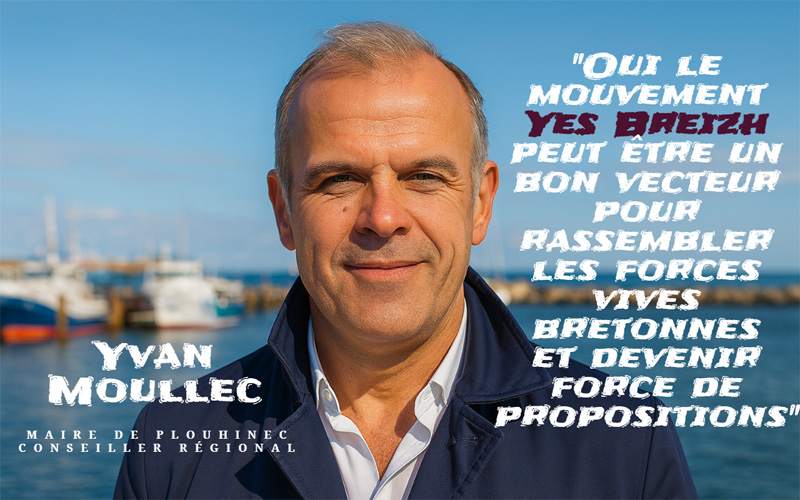
Decisions for Brittany must be taken in Brittany. That is the meaning of Yes Breizh.
Join Yes Breizh
Support Yes Breizh on Hello Asso or PayPal
Visit our online shop.